

Dr. Eumelia “Nini” Bautista de Garcia’s groundbreaking life is outshined only by her lifelong commitment to the service of others.
One Extra-Ordinary Life
Dr. Eumelia “Nini” Bautista de Garcia
In her poem The Summer Day, Mary Oliver poses the question:
Tell me, what is it you plan to do
With your one wild and precious life?
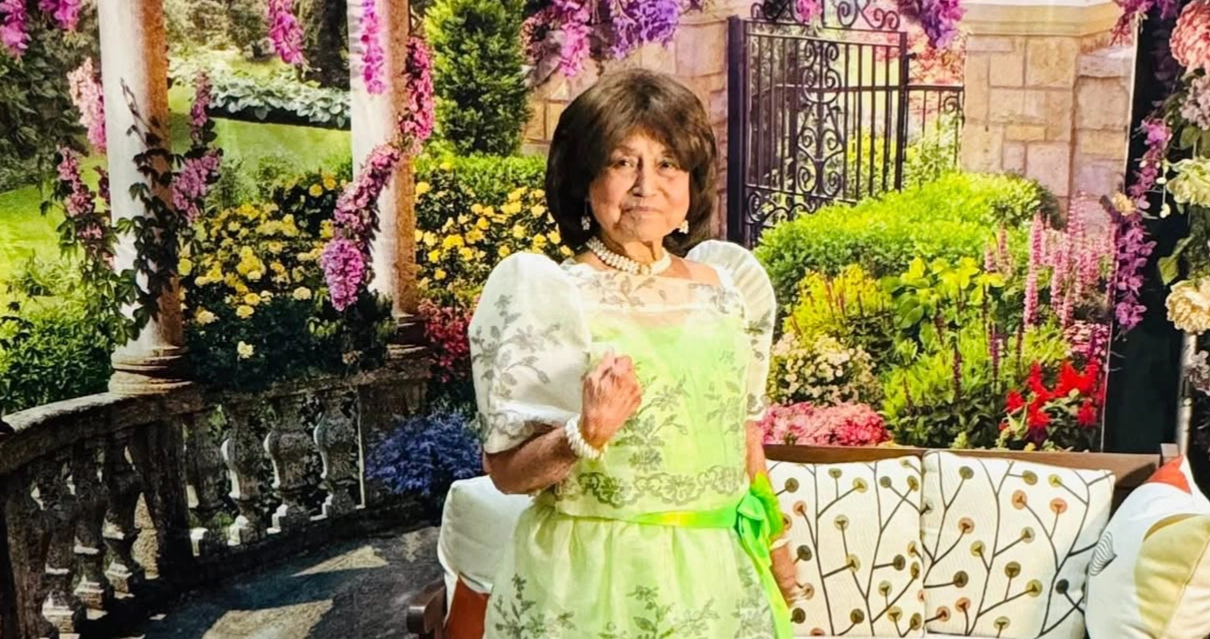
It seems that Dr. Eumelia “Nini” Bautista de Garcia (“Dr. Nini”) simply answered, “Everything.” In addition to a lifetime of groundbreaking achievements, a globe-crossing career, it is Dr. Nini’s unparalleled commitment to serving others that makes her unique—especially in Charlotte. Along with a commitment to academic rigor, it’s a value that she learned from her parents while growing up in Cavite City, Phillipines. She entered university at the age of 15, thinking she would become a doctor like her older brother. Instead, she became a nuclear chemist, inspecting facilities throughout Europe and Asia for the International Atomic Energy Agency. Since moving to Charlotte, she has used her keen intellect and passion for service—not to mention her considerable personal charm—to lead a dizzying array of of civic and community endeavors.
Early Life
Born in Cavite City, Philippines, Nini learned from her parents early on that a life in the service of others would be an ennobling one. Dr. Hernando Bautista, a dentist, and Mrs. Soledad Bautista, an entrepreneur and bank officer, were both active in and founders of civic organizations in Cvite. Hernando was a co-founder of the Rotary Club and the YMCA in the city, as well as a 32nd degree Mason and Grand Master, both in the York and Scottish Rites. Soledad was co-founder and Worthy Matron of the local Order of the Eastern Star, and president of the Inner Wheel Club (a club for women associated with the Rotary Club, at a time when women were not allowed to join as members), and the Women’s Club.
“I first thought I was going to be a doctor.”
A top student in her high school, Nini enrolled at the University of the Philippines in Manila at the age of 15. “Cavite City was about 20 miles from Manila. I had to be accompanied to the university, because I was so young,” recalls Dr. Nini. “I was already doing work for the Pre-Med, so I told the driver, ‘We’re going to that building, because I know where to enroll. And my mom said, ‘Why don’t you try this new thing, chemical engineering. If you don’t like it, you can shift back to pre-med.’ I said, ‘Mom, no, my friends are already waiting for me.”
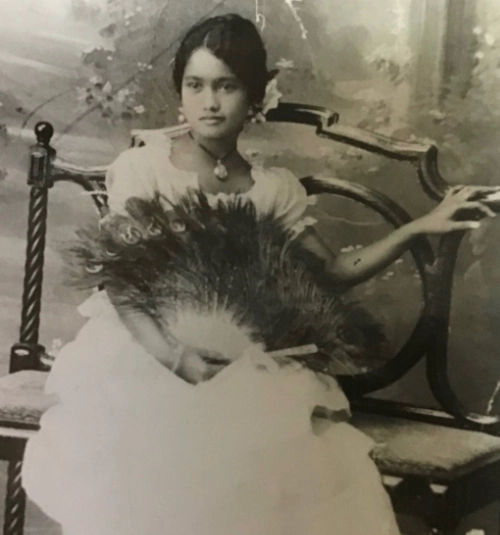
Dr. Nini’s mother, Soledad B Bautista, founder of many civic organizations in Cavite who, with her husband, Dr Hernando R. Bautista, inspired Dr. Nini with the notion that ”a life in the service of others is ennobled.“
At the time, Nini’s older brother was already in medical school. He was coming home with horror stories from anatomy classes, and he was discouraging his younger sister from pursuing pre-med. And at 15, Nini wasn’t in a position to disobey her mother, so she enrolled in chemical engineering.
“I was the only girl there. I said, ‘Mom, I don't like this,’ but she just said, ‘No, you just try this. You can always change later.’ I perservered, and I began to like it. When I graduated, my parents said I could still go into medicine. But I really didn't like injections, or the sight of blood—and I’m so glad my brother saved me!”
Nini ended up with a Bachelor of Science degree in Chemical Engineering and was a licensed chemist. But that was only the beginning.

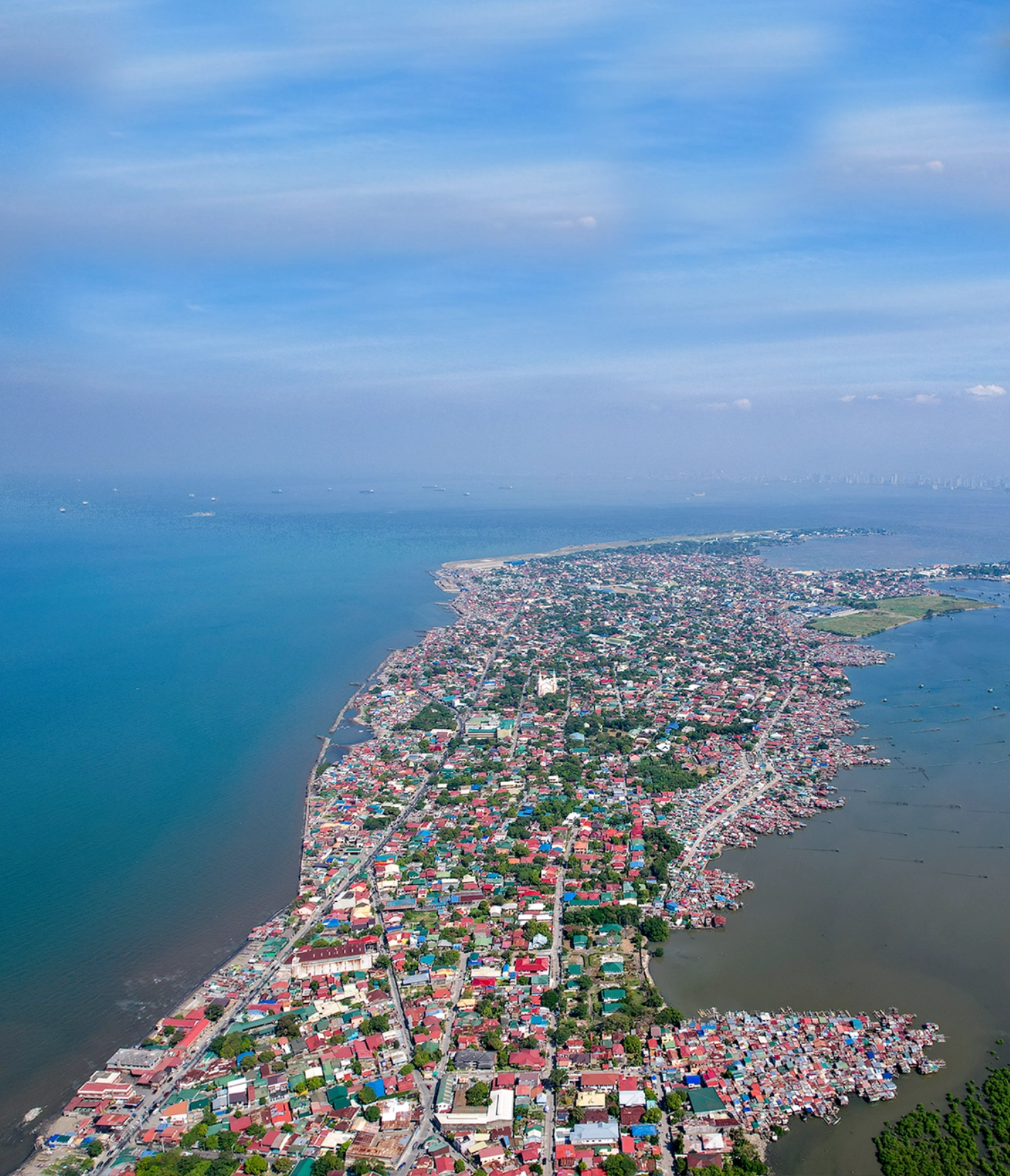
Dr. Nini’s Hometown – A Historic City
Cavite City, Philippines
Cavite City’s settlers were Tagalogs, who called the area “Tangway,” meaning peninsula. Others, referring to the shape of the land along the coast of Bacoor Bay, referred to it as “Kawit” or “Cauit,” meaning hook. The colonizing Spaniards mispronounced “Kawit” as “Cavite” (there being no “K” in the Castilian alphabet and also changing “w” to “v” so as to conform to their pronunciation.) The northern tip was known as Cavite la Punta (“tip of Cavite”).
When the Spaniards found it to be a suitable place for the construction and repair of their ships and galleons, they founded “Puerto de Cavite” (Port of Cavite), which became known as Cavite Puerto. Cavite Puerto served as the main seaport of Manila and hosted the Manila-Acapulco galleon trade during Spain’s colonial expansion to the Americas (mid-1500s to early 1800s), as well as other large sea-bound ships.
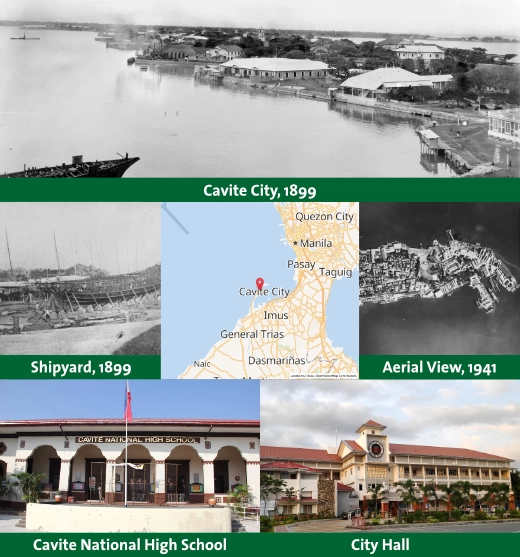
After the Treaty of Paris of 1898, Spain turned the port over to the United States, and at the start of the American era, Cavite Puerto became the seat of the U.S. Naval Forces in the Philippines. On December 10, 1941, two days after the attack that destroyed American air defenses at Clark Field and three days after the Japanese attack on Pearl Harbor, Japanese Imperial Forces destroyed the Cavite Naval Base and bombed Cavite City. In 1945, during the fight to liberate the country from Japan, the U.S. and Philippine Commonwealth militaries bombarded the Japanese forces stationed in the city, completely destroying the old historic port of Cavite.
In September 1972, president Ferdinand Marcos placed the Philippines under martial law and remained in power for 14 more years, and Cavite endured many social and economic obstacles. Today, Cavite City is a mix of Spanish colonial architecture, modern developments, and a vibrant local culture.
Advanced Education and a Groundbreaking Career
Dr. Nini
INSERT COPY HERE
Nuclear Inspector
Service
Languages
- Tagalog
- English
- Spanish
- German
- Chabacano
Education
- Ph.D. Nuclear Chemistry, Universidad de Madrid, Madrid, Spain (under a UN/IAEA Fellowship grant) Sobresaliente cum Laude
- Post Doctoral Studies on Plutonium Monitoring, Commission Nacional de Energia Atomica, Buenos Aires, Argentina (under a UN/IAEA Fellowship grant)
- MBA, Ateneo University (Harvard Case Study Method)
- MS Chemistry, Adamson University
- BS Chemical Engineering, University of the Philippines
- MS Nuclear Engineering, University of the Philippines
- Advanced Training in Atomic Energy in the various centers of excellence of Atomic Energy establishments and Research Centers in the USA, Germany, England, France, Japan, Hungary, Czechoslovakia, Russia, Austria.
Work History
- Nuclear Safeguard Inspector, UN International Atomic Energy Agency, Vienna, Austria
- Area Officer for Technical assistance & Cooperation in Atomic Energy, UN International Atomic Energy Agency, Vienna, Austria
- Chief, Chemistry Research, Philippine Atomic Research Center
- Director, Nuclear Research Institute, Philippine Atomic Energy Commission
- Project Leader/Research Chemist, National Science Development Board
- Professorial Lecturer, Graduate School, Philippine Womens University
Books Written
Me and My World
First pre school textbook in science, with companion Teachers Guide, Manila
Celebration
The Filipinos in Austria, Centennial Celebrations of the Republic of the Philippines, Vienna
Voices of the Filipina
Anthology of Successful Filipinas Overseas
New York
The Bautistas of Cavite
Anthology of Stories of an Old Family in Cavite City since the 18th century
Charlotte
Our Ancestors
Story of the Valdiva-Bautista Clan
Los Angeles & Charlotte
Writer for Asian Herald
Charlotte
International Atomic Energy Agency
Vienna International Center: Headquarters of United Nations organizations, including the International Atomic Energy Agency. Vienna, Austria.
Nini at the Junta de Energia Nuclear
The young Dr. Nini Bautista de Garcia at the Junta de Energia Nuclear, Madrid, where she finished her doctoral research on Protactinium.
Dr. Nini and Manuel Garcia in their garden
Dr. Nini and Manuel Garcia in their garden in Vienna, Austria
Dr. Nini with top officials of the IAEA
Dr. Nini with top officials of the International Atomic Energy Agency, Vienna, Austria.
At a cafe on the Danube River
At a cafe on the Danube River, with the five tower UN Vienna International Center in the background.
Dr. Nini and family
Dr. Nini with husband Manuel Garcia, son Alvaro, and daughter Arancha
Dr. Nini with Philippines president Corazon Aquino
Dr. Nini with Philippines president Corazon Aquino, after Aquino addressed UN organizations in Vienna.
Dr. Nini at the Junta de Energia Nuclear
The young Dr. Nini Bautista de Garcia at the Junta de Energia Nuclear, Madrid, where she finished her doctoral research on Protactinium, under a UN/IAEA fellowship.
Dr. Nini at the at the Junta de Energia Nuclear
The young Dr. Nini Bautista de Garcia at the Junta de Energia Nuclear, Madrid, where she finished her doctoral research on Protactinium, under a UN/IAEA fellowship.
Dr. Nini at the Cultural Center of the Philippines
Dr. Nini at the Cultural Center of the Philippines on June 3, 1978, after receiving the prestigious Putungan Award for Science & Technology from Ms. Carolina Basa Salazar, President of the Civic Assembly of Women of the Philippines.
Dr. Nini at Malacanang Palace
Dr. Nini at Malacanang Palace receiving the Gawad Gintong Kalabaw, Award of Excellence from President Gloria Macapagal Arroyo in commemoration of the Centennial of Cavite High School.
Charlotte
Service
A Lifetime of Service and Achievement
Community Service
Dr. Nini has founded or co-founded, chaired, and served on important Asian American organizations in the Charlotte area.
- Asian American Foundation for the Carolinas, Chair
- Carolinas Asian American Chamber of Commerce,
Chair Emerita and Past President - Filipino American Spirit, Chair
- Asian Festival, Co-Chair
- Taste of the World, Co-Founder
- Filipino American Community of the Carolinas, Past President
- Womens Intercultural Exchange, Past President
- Miss Asian Festival/Miss Asia Carolinas, Founder
- Asian Music & Dance Fest, Founder
- The Search for the Best of Asian Festival Performing Arts, Founder
- Journey of Hope AAPI Museum Exhibit, Co-Chair
Dr. Nini has also served on numerous civic boards, as well as various selection committees.
- Charlotte Museum of History
- Charlotte-Mecklenburg County Personnel Board
- Community Building Initiative (FTTC)
- Greater Carolina Red Cross
- International House
- Leadership Charlotte
- North Carolina Governors Conference for Women
- Opera Carolina
- United Way
- University of North Carolina College of Arts & Science Advisory Board
Awards & Recognitions
- Lifetime Achievement Award For Outstanding Professional Career & Community Service Excellence
Filipino American Spirit , 2025 - Impacting Change Leader
Lt. Governor’s Office, State of North Carolina , 2023 - Asian Pacific American Municipal Officials Local Leadership Award
National League of Cities, 2017 - Distinguished Community Service & Leadership Award
Asian American Pacific Islander Caucus of Mecklenburg County , 2016 - 25th Anniversary Community Award for Cultural Advocacy
Asian Herald , 2013 - Global Leader Award
Mayor’s Charlotte International Cabinet, City of Charlotte, 2013 - Dynamic Women of Charlotte Award
US Airways , 2011 - 100 Most Influential Filipina in the US Award
National Award, Based in San Francisco, 2010 - Dynamic Woman Award ( Community Service & Diversity)
Girl Scout Hornets, 2008 - Ambassador of Cultural Diversity Award
Life in Charlotte , 2005 - Philippine Republic Award in Science and Technology
- Mayors Award, Outstanding Cavitena Award in Nuclear Energy
- Centennial Award, Outstanding Graduate, Cavite National High School
SHARE THIS PAGE
PHOTO GALLERY - FAMILY, AWARDS, ETC.